
Blood and Marrow Transplant


Blood and Marrow Transplant
If your child or young adult requires a blood and marrow transplant and cellular therapy management (BMT/CT), you want the best care possible from a team of experienced medical professionals who care about your child as much as you do.
At Children’s Mercy, we have the resources, knowledge and expertise to not only help your child survive a life-threatening illness, but to thrive after treatment and live a healthy life.
Since the program began, Children’s Mercy team members have completed over 810 life-saving blood and marrow transplants.
Accredited care

Recognized by the Foundation for the Accreditation of Cellular Therapy
Accredited by the Foundation for the Accreditation of Cellular Therapy
Since 2007, our program has sustained its accreditation by the Foundation for the Accreditation of Cellular Therapy (FACT).
We are also a member of several organizations that help ensure your child receives the best care possible, including:
- NMDPSM
-
Center for International Blood and Marrow Transplant Research (CIBMTR)
-
Pediatric Blood and Marrow Transplant Consortium (PBMTC)
-
Children’s Oncology Group (COG)
- American Society for Transplantation and Cellular Therapy (ASTCT) (MDs, APPs, Pharmacists, Transplant Coordinators, and Data Quality Managers are members of the ASTCT)
- Pediatric Real World CAR T-cell Consortium (PRWCC) (Physicians)
Your blood and marrow transplant care team
The process of caring for a child who needs a transplant is complex and requires the skills and expertise of a team of specialists. All team members specialize in blood and marrow treatment.
The pediatric hematology/oncology and BMT division at Children's Mercy hospital is part of the National Cancer Institute-designated Cancer Center at the University of Kansas Cancer Center and the Stowers Institute for Medical Research. This partnership offers progress in cutting-edge cancer research to help the treatment of children with cancer.

Transplant options for every child
One of the first questions families ask us is will my child have a donor? When we meet a child in need of a transplant, we search to find the best donor option for each child. As collaborators with the NMDPSM, the BMT/CT program at Children’s Mercy has access to donor registries throughout the world.
Advanced treatment for diverse disorders
The BMT/CT Program performs transplants for children up to age 21 (or older, if approved on a study). Bone and marrow transplants treat varying forms and stages of cancers. We also use transplantation to treat immune system (immunologic) disorders, blood (hematologic) disorders, and metabolic disorders. We treat a wide range of diagnoses with transplant and have cared for many children with rare diseases through transplant.
Conditions
The wide range of diagnoses we treat with Allogeneic transplant includes rare disorders such as:
-
Acute Lymphoblastic Leukemia (ALL)
-
Acute Myelogenous Leukemia (AML)
- Chronic Myelogenous Leukemia (CML) in second phase
- Juvenile Myelomonocytic Leukemia (JMML)
- Bone marrow failure syndromes:
- Fanconi Anemia (FA)
- Dyskeratosis Congenita (DKC)
- Metabolic disorders:
- Hurler Syndrome
- Primary immune deficiencies like:
- Wiskott-Aldrich Syndrome
- Severe Combined Immune Deficiency (SCID)
- Chediak-Higashi Syndrome
- Crohn’s- IL-10 Receptor Mutation
- XIAP
- Congenital Dyserythropoietic Anemia (CDA)
- Severe Aplastic Anemia (SAA)
- Sickle Cell Disease (SCD)
- Transfusion dependent Beta Thalassemia (TDT)
- Adrenoleukodystrophy (ALD)
- Diamond Blackfan Syndrome (DBA)
- Glanzmann Thrombasthenia (GT)
- Hemophagocytic lymphohistiocytosis (HLH)
- Osteopetrosis
- Systemic Juvenile Idiopathic Arthritis and Macrophage Activation Syndrome
- Hodgkin’s Lymphoma (HL) (2nd relapse)
The wide range of diagnoses we treat with Autologous transplant includes:
- Hodgkin’s Lymphoma (HL) (post 1st relapse)
- Neuroblastoma (NB)
- Wilms tumor (WT) Relapsed
- Ewing Sarcoma (relapsed)
Cell and Gene Therapy for patients 12 years old and up:
- Sickle Cell Disease (SCD)
- Transfusion dependent Beta Thalassemia (TDT)
Immune Effector Cell Treatment (CAR-T cell):
- Relapsed/Refractory Acute Lymphoblastic Leukemia
Research for advanced options
Research today leads to advanced treatment options for children who need transplant in the future.
The BMT/CT clinical program is participating and collaborating on many multi-institutional and consortium based clinical studies and disease registries.
Stories
Aplastic anemia: Nick's story
One day Little League pitcher, Nick, just wasn't himself on the field. After a visit with his pediatrician, Nick was referred to Children's Mercy where the cause was diagnosed — a condition that hinders the bone marrow from making enough blood cells. See how Nick found the right treatment and even threw out the first pitch at a New York Yankees game.

Beta thalassemia major: Hadil's story
Hadil, a Syrian refugee, had battled a rare inherited blood disorder since birth called beta thalassemia major. Now thanks to a successful bone marrow transplant at Children’s Mercy, where survival rates are at or above national averages, she is meeting the challenges of life in her new home.
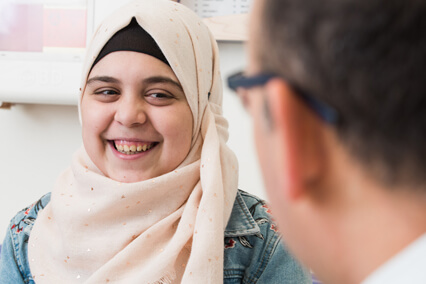
Refractory anemia with excess blasts: McKenzie's story
A winning athlete on the tennis court, McKenzie Haynes used that same spirit to meet the challenge of her young life—refractory anemia with excess blasts Type 1. Treatment at Children’s Mercy included blood transfusions, chemotherapy and a bone marrow transplant. Several months later, she was back on the court in top form.
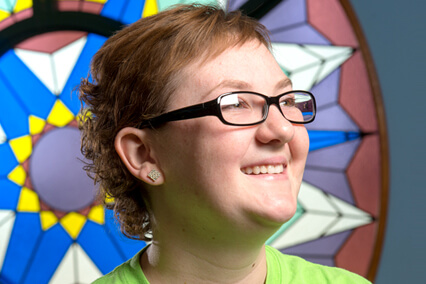
Triosephosphate isomerase deficiency: Wyatt's story
Four-year-old Wyatt was diagnosed with a rare genetic multisystem disorder called TPI shortly after he was born. A bone marrow transplant at Children’s Mercy, was his best chance for survival.
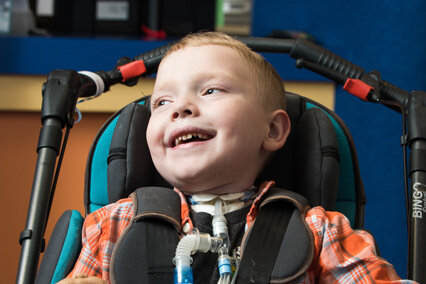
SCID: Connor's story
Connor's family chose Children's Mercy over many other options to care for Connor when he was born with X-linked severe combined immunodeficiency (SCID). Learn about his experience.
Contact the Blood and Marrow Transplant Team
Interested in learning more about the BMT program? Please contact the care team.
Patients and families:
(816) 302-6808
Referring health care providers:
(816) 302-6808
HOBMTNewPatientReferral@cmh.edu